
- Overview
- Scorecard
- Updates32
Slurps webpages, cleans off all the crud, and saves them to Obsidian as nice, tidy Markdown files. Think Pocket, but better.
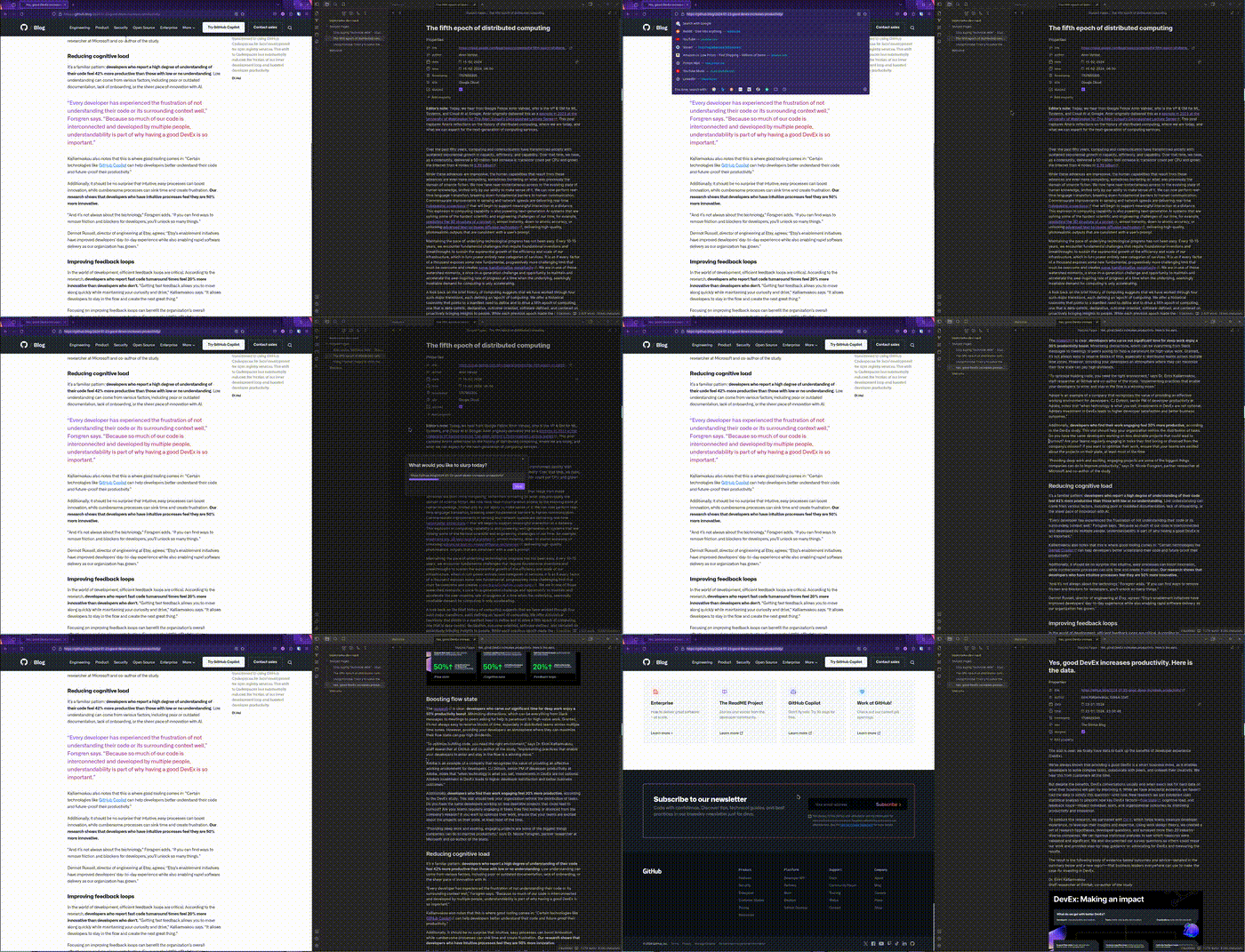
Features
- Slurp pages into Obsidian using the command palette, bookmarklets, or browser extensions (soon™️).
- Customize frontmatter properties with formatting options or by adding your own.
- Enrich slurped pages with frontmatter automatically using metadata sources like OpenGraph, including:
- Tags - Create customizable tags from keywords present on the page.
- Excerpt - Often used for subtitles, excerpts, descriptions, and abstracts.
- Byline - Name of the primary author or the first author detected.
- Site name - Website or publication name. Useful for blogs and news sites.
- Published and Modified dates
- Permalink
- Page type - The page type, usually "article", "page", or "post".
- Twitter handle
- Onion mirrors
- and more...
- Works on desktop and mobile devices.
New!
- Slurp only the frontmatter, useful for taking notes. Available as a permanent or per-slurp option.
- Share pages with Obsidian from any mobile app and you'll get an option to slurp them.
Usage
Detailed usage information can be found in the documentation.
Create Note from URL
- Ctrl+P or Cmd+P to open the command palette
- Select Slurp: Create note from URL
- Paste the URL and hit Enter or tap the Slurp button
Using the "share" function on your device
New in v0.2.0! On Android and iOS devices, you can share web pages with Obsidian. When Obsidian opens it will open a menu containing options for how to handle this URL. Tap the Slurp option and you're done!
Using Bookmarklets
Slurp exposes a custom URI which can be used for one-click saves.
Bookmarklets are a simple option for those who prefer them. Simply create a new bookmark with the following URL set:
javascript:(() => document.location.href=`obsidian://slurp?url=${document.URL}`)();
To save only frontmatter for a capture, regardless of the global setting, use:
javascript:(() => document.location.href=`obsidian://slurp?url=${document.URL}&frontmatterOnly=true`)();
Browser extensions are also coming soon for Firefox and Chrome-compatible browsers. If you want to get started right away, they are currently in beta and can be manually installed. See https://github.com/inhumantsar/slurp-extension for details.
Settings
FrontMatter Properties
Note properties are used by Obsidian to add metadata to notes. Supported data types include checkboxes (true and false values), dates and datetimes, lists, numbers, and good ol' plaintext.
By default, Slurp will try to find relevant metadata and add it to new notes. The plugin settings screen offers a few ways to adjust how this metadata is handled and presented:
- Edit property keys to define what name to use for the metadata.
- Tap the up and down arrows to customize the order in which properties appear in notes.
- Use the Show empty properties toggle to get Slurp to add properties even if there is no data to populate them with.
- Selectively enable/disable individual properties.
- Customize how properties are formatted.
- Add custom properties.
For more information, check out the documentation.
Beta Testing
If you would like to help test new features before they are officially released:
- Install BRAT from the Community Plugins directory
- Open the command palette and run the command
BRAT: Add a beta plugin for testing.
- Do not use a frozen version! I don't tag pre-releases.
- Enter this repository's URL, ie:
https://github.com/inhumantsar/slurp.
BRAT will regularly look for updates and install them. This can be configured/disabled in the BRAT settings menu.
Development Environment
Slurp does a couple things differently from the standard Obsidian plugin development setup:
- Svelte 5 is used to build the property settings component
- The Typescript libraries have been updated to v5.4
If you are a plugin developer already, using a separate environment for Slurp is recommended.
direnv
There is a direnv config which can be used to quickly configure a completely isolated local environment. Setting it up requires a few extra steps though.
- Install the Nix package manager:
sh <(curl -L https://nixos.org/nix/install) --no-daemon - Ensure
flakesandnix-commandare enabled, eg:mkdir -p ~/.local/nix && echo "experimental-features = nix-command flakes" >> nix.conf - Install
direnv, adjusting or removingbin_pathas needed:curl -sfL https://direnv.net/install.sh | bin_path=~/.local/bin bash direnvwill instruct you to add a line to your.bashrc, once that's done, rundirenv allow.
Building
npm install     # not required if using direnv
npm run dev     # enable hot-rebuilds of main.js
Versioning
The usual semantic versioning applies.
manifest-beta.json provides the dev channel specifications for BRAT.
Test Vault
test-resources/vault is an Obisidian vault that can be used for testing. As a side-benefit, it's a place to keep development notes.
There is a symlink in the vault's plugins directory which uses a relative path to reference the repository root. This may or may not work for you after cloning. Remove and recreate it if Obsidian doesn't see the plugin properly.
NOTE: The plugin won't work (and may not even be recognized) if you haven't built the project yet!
Hot Reload
Hot Reload is a commonly used plugin for Obsidian plugin development. It will watch for modified plugins and automatically reload it within a running Obsidian instance. It's included in the test vault as a submodule, so you will need to update it on first clone:
git submodule update --init
Testing
URI Handler
On Linux:
xdg-open "obsidian://slurp?url=https://..."
Credits
- Mozilla's Readability powers the underlying conversion.