Harmony
 yodavatar769 downloads
One task, multiple perspectives. The ultimate modular workspace.
- Overview
- Scorecard
- Updates16

Table of Contents
Introduction
The goal of Harmony is to make Obsidian. as powerful as a professional tool (like Notion), but 100% local and open source.
Be as productive as possible by staying in control of your data. There are many ways to be more productive; the methods we are trying to implement are here.
Harmony is open to contribution. Look at the Roadmap to see what happens next.
Features
1 - Dashboard module
Dashboard in a new window.
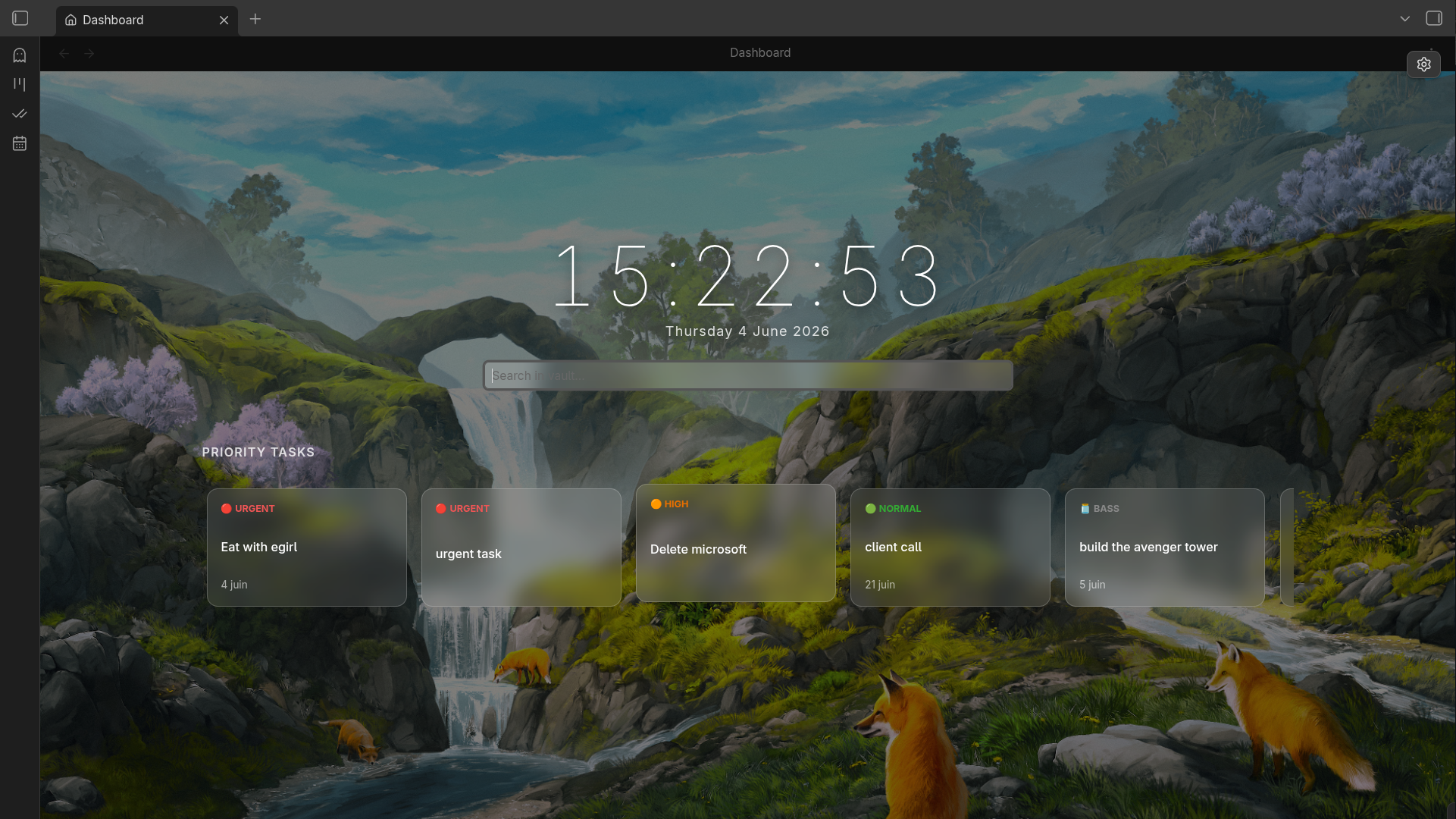
- Urgent tasks
- Next tasks
- +More customization options
2 - Better Kanban module
Kanban is a methode of organisation for a to do list.
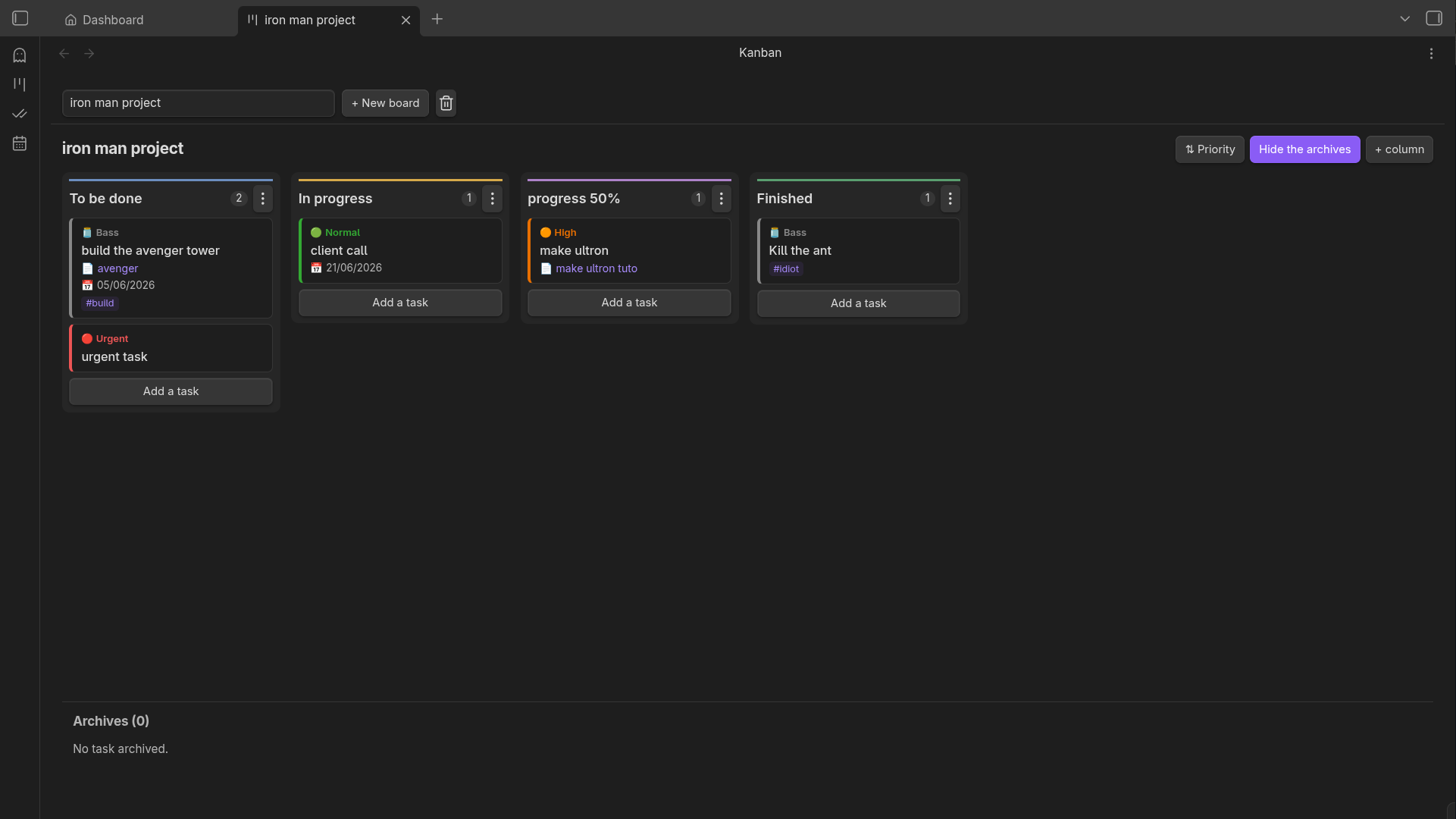
- Support for multiple boards
- Multiple columns (move left/right, change color, delete)
- Create tasks (multiple priorities, due dates, links, tags, delete)
- Archiving features for notes
- Sort tasks
3 - Better Calendar module
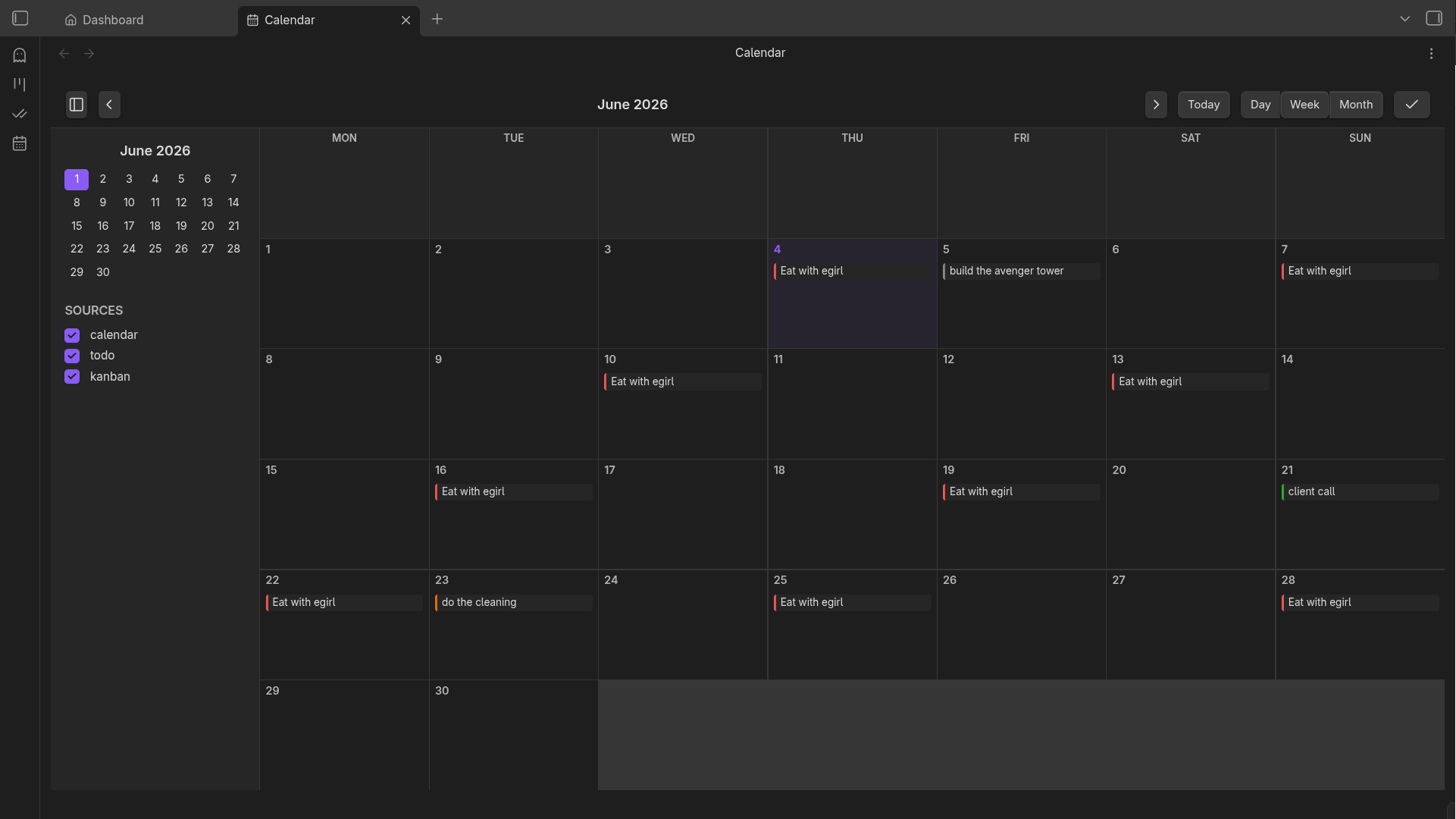
- Multiple view (daily, weekly, monthly)
- Create tasks (multiple priorities, due dates, delete )
- Support for recurring tasks
4 - Minimalist Todo List
A simple to-do list organized by priority.
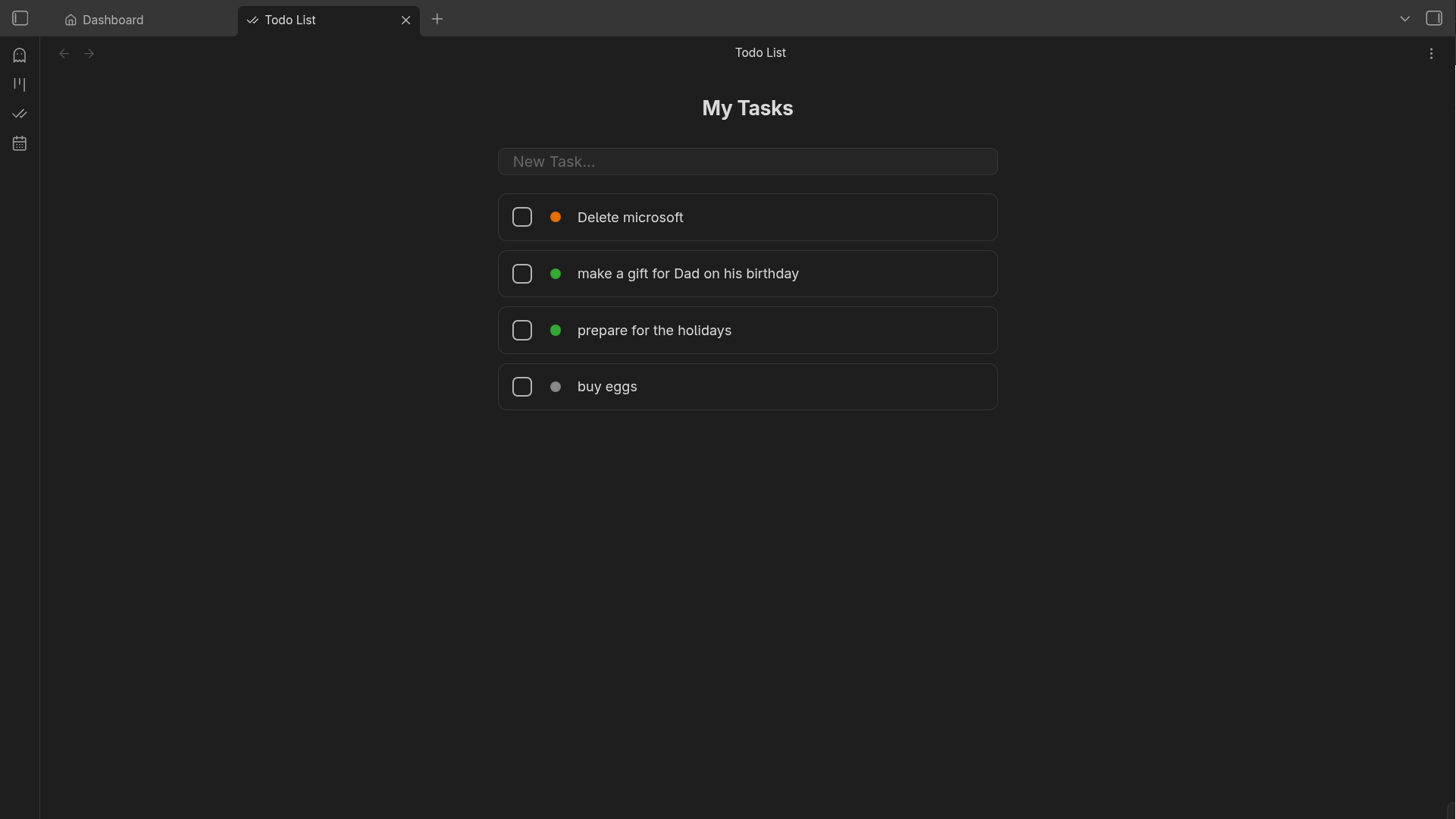
- create a quick task
- Change priority / delete
5 - Activated/Desactivated module
Enable or disable the module you need, in the Harmony settings.
Installation
To install Harmony, you can:
Directly from the Obsidian store: Download here.
Clone the repository:
git clone [email protected]:Yodavatar/Harmony.gitGet to zip: You can get the link to the zip here.
Usage
To use Harmony you need to have last obsidian's version.
You can install Obsidian on here.
Go to settings, on the Community plugins
Then you need to activate community plugins.
Place the project in the "plugins" folder
of the Obsidian Vault you want to test.
Install dependencies
 npm install
 npm run build //run in the good folder
Now you return in the Community plugins.
You should see that the pluggin.
The final step is to activate the plugin.
Contribution
Want to contribute to Harmony.
We love community contributions! You can find all the guidelines, code standards, and workflow steps in our Contribution Guide.
License
This project is licensed under the agpl-3.0.
See the GNU AFFERO GENERAL PUBLIC LICENSE file for details.
Discussions
The Discussions are open here.
Contact
If you have any questions or suggestions,
feel free to contact me at [email protected]