
- Overview
- Scorecard
- Updates5
English · Русский
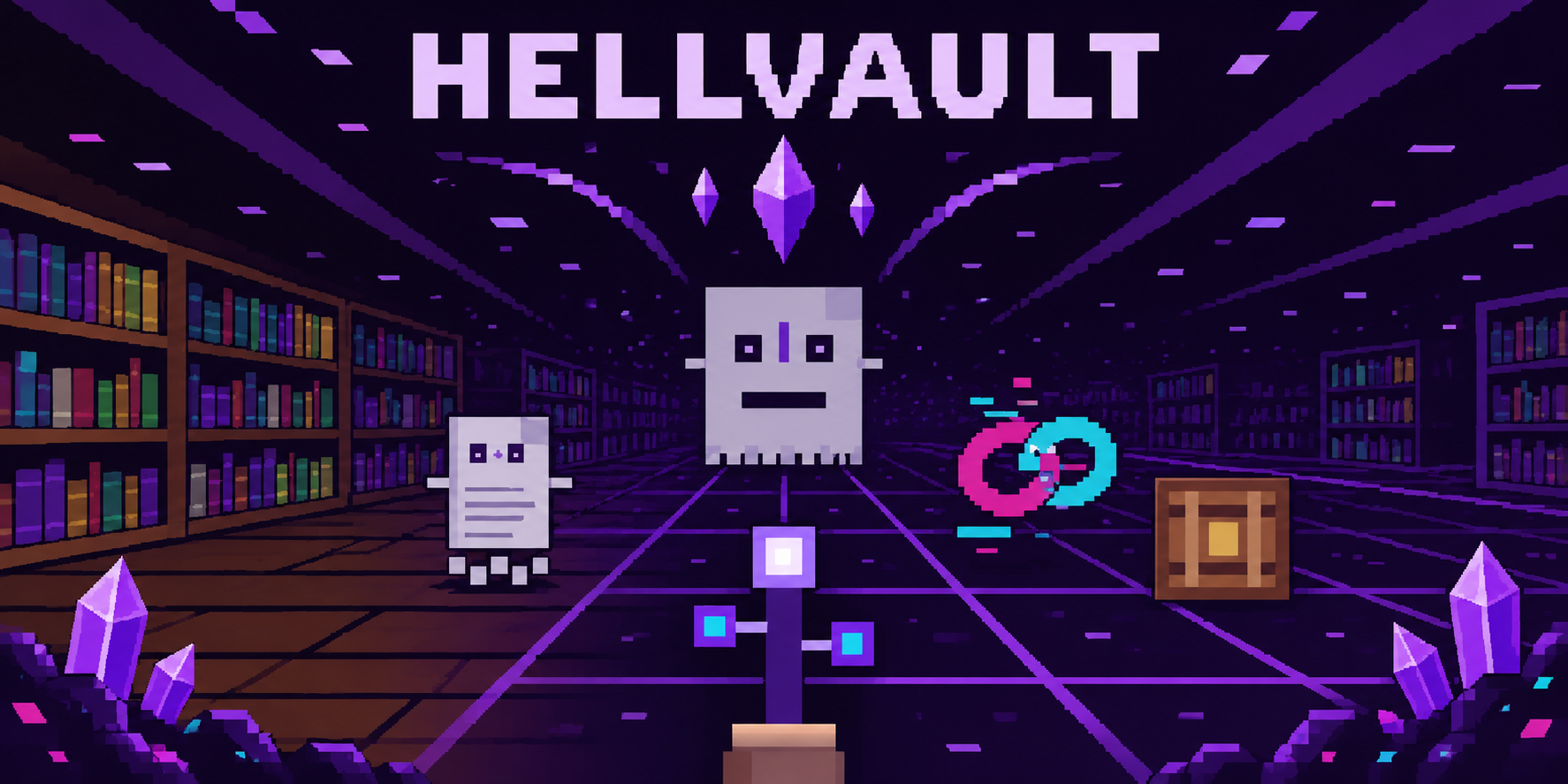
HELLVAULT
A Doom-like shooter inside Obsidian.
Notes have become monsters. Links lead into darkness. The Vault needs its Keeper.
◆ Pixel art · Three modes · Obsidian desktop only ◆
Corruption has severed the connections between notes and reached the Core. Take up your Quill, find the obsidian shards, and stop the Blank Note before the Vault becomes a clean page.
🎮 Three ways to play
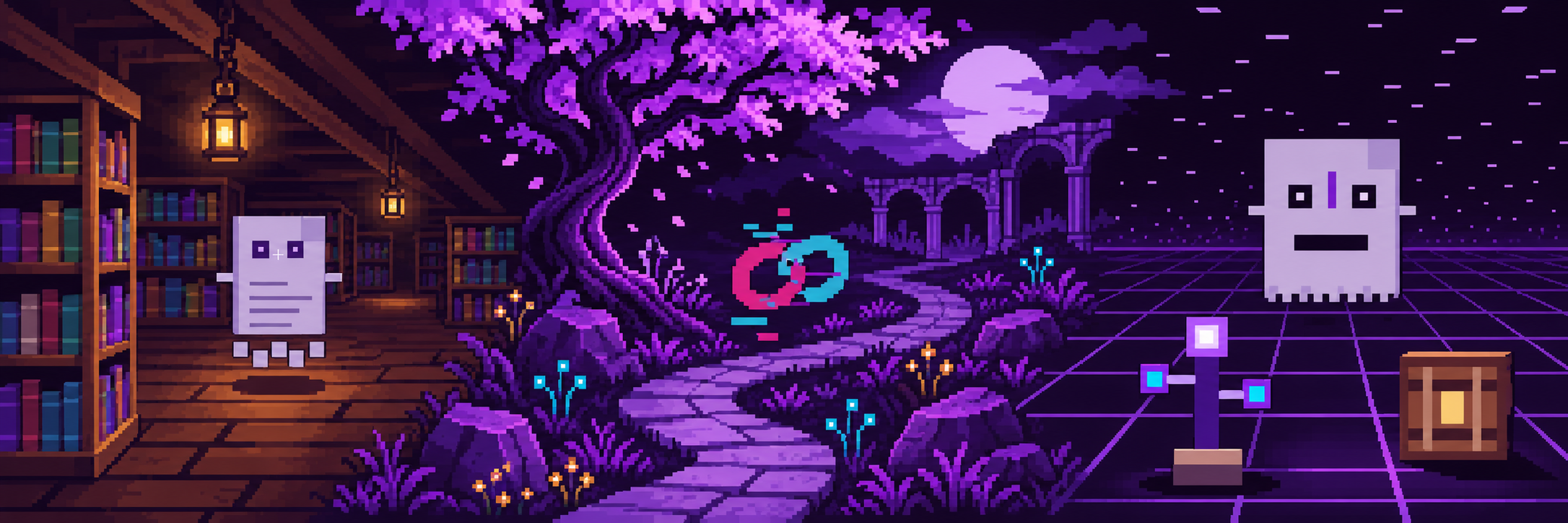
- 📖 Story — explore five zones, collect seven shards, break the seals, and fight your way to the final boss. Search for secrets and diary pages along the way.
- ⚔️ Linear Path — keep moving, fight off enemies that spawn over time, and defeat the boss at the end. No shards to hunt for here.
- ♾️ Endless Arena — survive waves, smash supply crates, and choose an upgrade after each wave. A boss arrives every fifth wave, and your best runs make the records table.
The arena unlocks after your first story victory on any difficulty. Each mode has its own save.
✨ Features
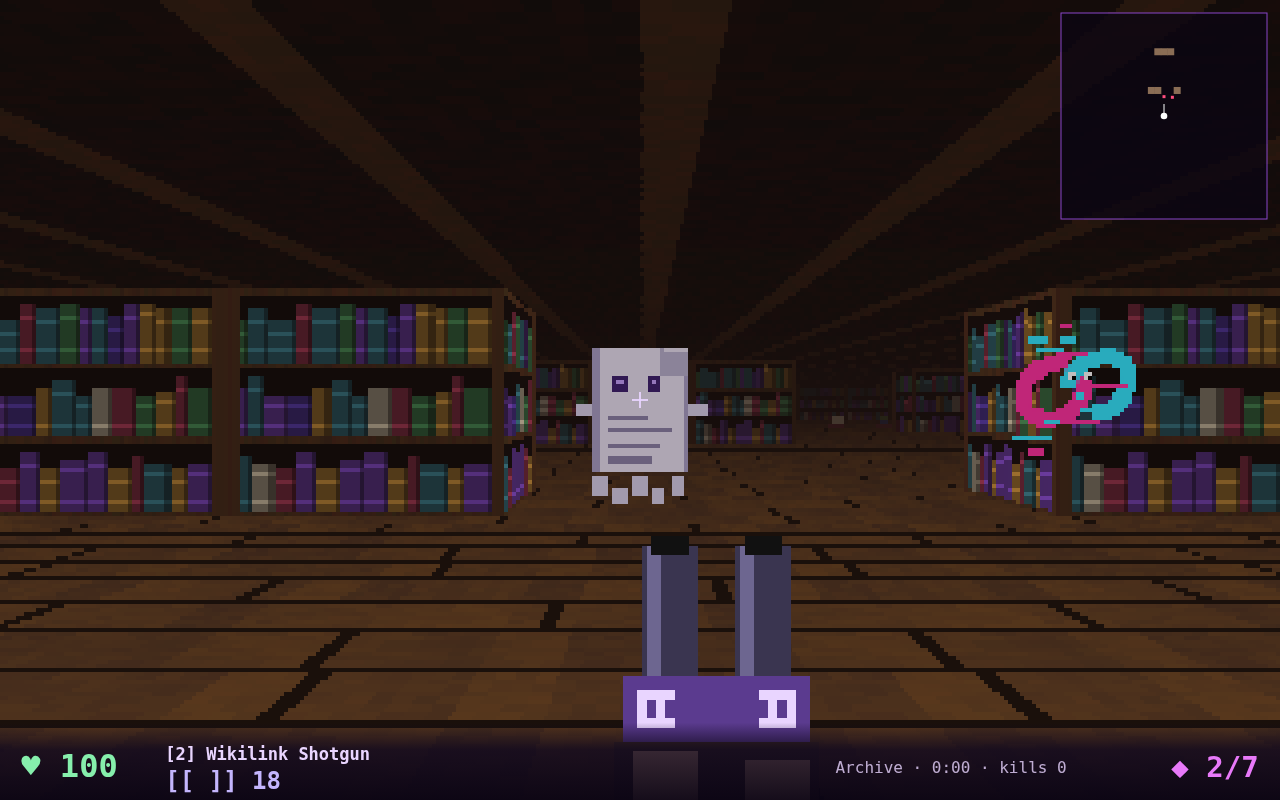
- Three weapons: the Quill with unlimited ink, the Wikilink Shotgun, and the Graph Laser.
- Familiar enemies: Orphans, Broken Links, Duplicates, Spam Tags, and the Blank Note.
- Three difficulties: from Easy to Hard, where the Keeper has just 1 HP.
- Explore and collect: secrets, a Codex, 12 diary pages, and 21 achievements.
- Your vault becomes part of the game: enemies and gravestones can use note titles. Choose included folders, exclude private folders, or turn note names off.
- Original soundtracks: each mode has its own synthesized action theme — Ashes of the Vault, The Long Way Down, and Fifth Wave — with separate music and effects controls.
- Kill log: see defeated enemies in the pause menu and open their associated notes. The feed uses your signed-in ObsiGama nickname when available.
📸 In-game
| The Archive | Arena boss fight |
|---|---|
 |
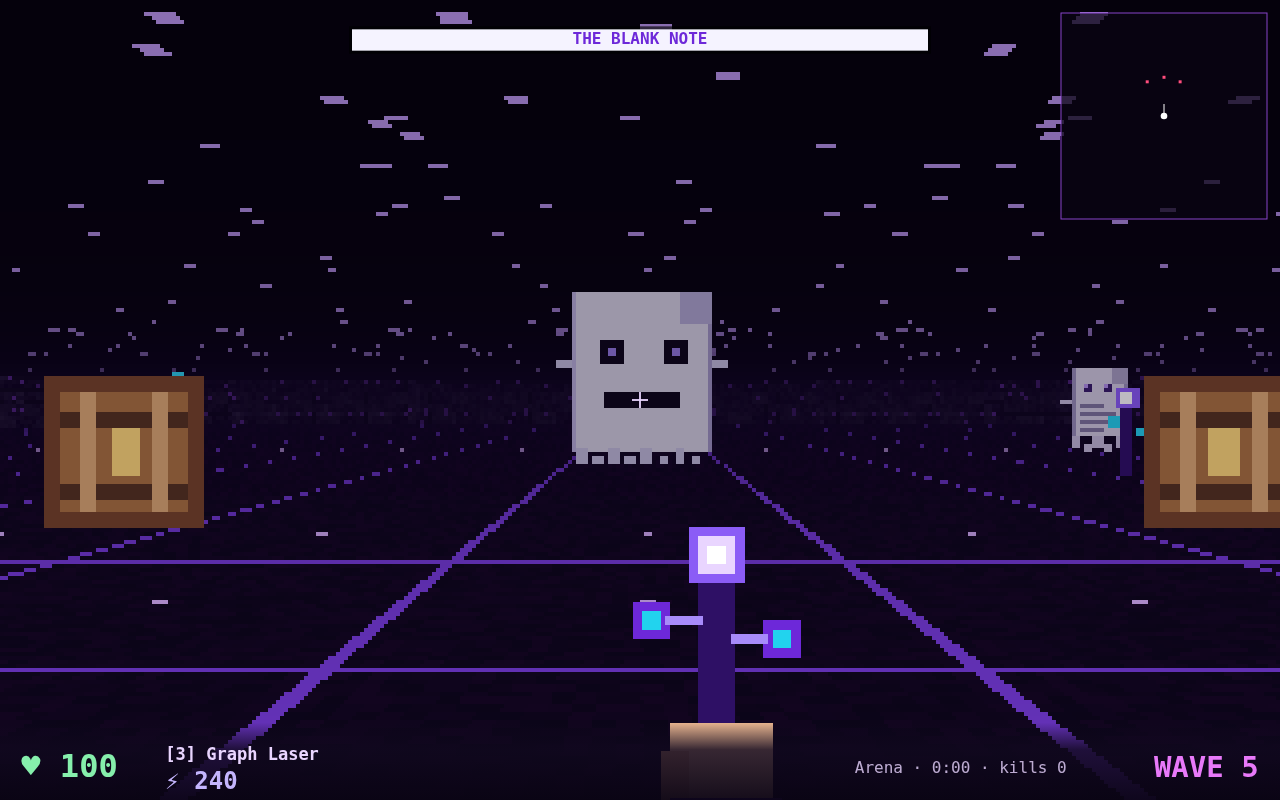 |
Gameplay images were captured in a test environment. The cover and mode illustration are inspired by the game's artwork.
🚀 Installation
Requires Obsidian 1.4.0 or newer on a desktop computer.
- Download
main.js,manifest.json, andstyles.cssfrom the latest release. - Create
<your vault>/.obsidian/plugins/vault-shards/and copy the three files into it. - In Obsidian, open Settings → Community plugins, refresh the list, and enable Hellvault.
- Launch the game with the crystal icon or the Open HELLVAULT command.
Release files include GitHub provenance attestations; for example, verify main.js with gh attestation verify main.js --repo NOMBER/HELLVAULT.
When updating, keep your existing data.json: it contains your progress, settings, and records. Keep the vault-shards folder name for compatibility with earlier versions. If you installed a test build numbered 2.1.0, replace the plugin files manually: Obsidian will not automatically update to a lower version.
Language / Язык: switch between English and Russian in the game settings or the plugin settings. New installations start in English; existing saves keep Russian.
🌐 Vault access and optional OBSIGAMA sync
HELLVAULT works offline. When note names are enabled, the game indexes Markdown note titles and paths across the vault for enemy names and gravestones; it does not read note contents for this feature. You can limit the index to selected folders, exclude folders and subfolders, refresh it, or turn the feature off in the plugin settings. An empty inclusion list means the whole vault; exclusions always take precedence. If no notes match, the game uses fictional fallback names and the settings show the index status. The last 1,000 kill-log entries, including note paths and the displayed player nickname, stay in the local plugin save. The optional Codex export creates or replaces its generated note in the vault.
OBSIGAMA is an optional gaming hub. Connect to OBSIGAMA is off by default. If you install the hub and enable the switch in Settings → Hellvault, the game shares run counts, active gameplay time (excluding pauses and menus), enemy kills, deaths, victories, collected pages, achievements, and arena/story records with the local hub. With an account and online sync enabled, OBSIGAMA may send that information to its Supabase service for profiles and leaderboards. Note names and vault contents are not included. Your progress remains local while the switch is off; without the hub or an online connection it remains available locally and can be synced later.
⌨️ Controls
| Keys | Action |
|---|---|
| W A S D / ↑ ↓ | move |
| Mouse / ← → | look and turn |
| Left click / Space | fire |
| 1–3 / wheel / Q | change weapon |
| Shift | run |
| E / F | inspect a wall or open a secret |
| M / Tab | map |
| Esc | pause and menu |
The original game is maintained as the existing bundled JavaScript in src/hellvault.js, the original sequenced music is in src/music.js, and the OBSIGAMA integration and SDK are TypeScript. Run npm ci, then npm run build to generate main.js and npm test to run the checks. The SDK is copied from ObsiGama under its MIT license.
Your Vault can still be saved. ◆
License: MIT